Willa Schulz · 7 September 2026
Charting How Early Experiences Forge Unique Angles on Trade Pacts, Energy Transitions, and Media Responsibility
Foundations Laid in Formative Years
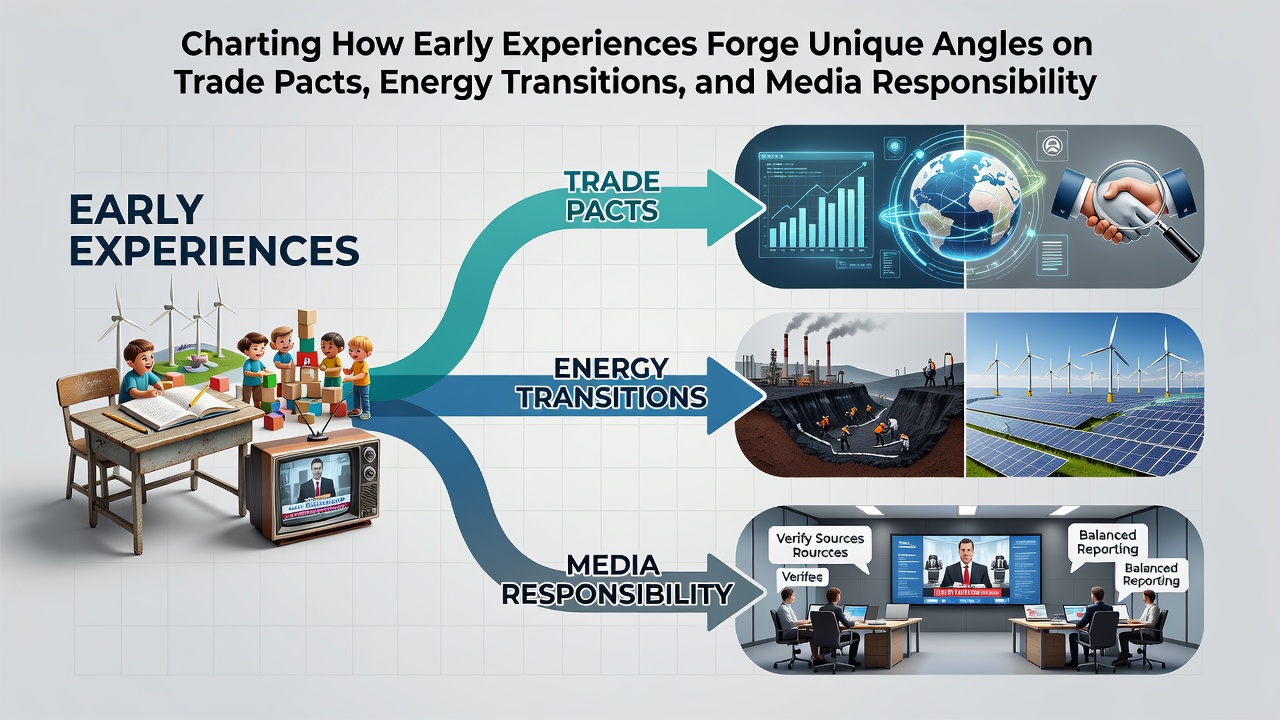
Researchers have documented how childhood environments shape later interpretations of complex policy areas including trade agreements, shifts toward renewable energy sources, and standards for information dissemination. Data from longitudinal studies indicate that exposure to economic instability during early development correlates with distinct positions on international commerce deals, where individuals who witnessed supply chain disruptions in their youth tend to prioritize provisions that emphasize local protections alongside global integration.
Observers note patterns emerging from family backgrounds tied to manufacturing or agriculture, as these often lead to advocacy for clauses in pacts that safeguard domestic industries while accommodating cross-border flows; evidence from multiple cohorts shows this connection holds across regions when controlling for education levels.
Energy Pathways Shaped by Upbringing
Early encounters with resource scarcity or abundance further influence approaches to energy transitions, with those raised in areas dependent on fossil fuels displaying measured support for phased replacements that include workforce retraining programs. According to figures from international assessments, such personal histories align with preferences for policies balancing emission reductions against employment stability in extractive sectors.
People who've studied these dynamics point to cases where urban versus rural childhoods produce contrasting emphases, one favoring rapid infrastructure overhauls and the other stressing incremental adaptations that maintain grid reliability during September 2026 policy reviews across several nations. The ball remains in the court of decision makers to reconcile these angles through inclusive frameworks drawn from varied stakeholder inputs.
Media Accountability and Personal Histories
Experiences with information access or censorship in formative periods also steer perspectives on media responsibility, where early reliance on community networks versus centralized outlets often translates into calls for transparency mandates and diversified sourcing requirements. Research indicates that individuals from backgrounds marked by misinformation events advocate for verification protocols that extend to digital platforms operating across borders.
Turns out these angles intersect with trade and energy discussions when content regulations affect how agreements are reported or how transition technologies gain public traction; a study from the Australian Institute of Family Studies revealed correlations between adolescent media consumption patterns and adult support for ethical reporting standards in policy debates. What's interesting is the way geographic diversity in data sources, including contributions from the European Environment Agency and Canadian policy archives, highlights consistent threads without uniform outcomes.
Intersections Across Policy Domains
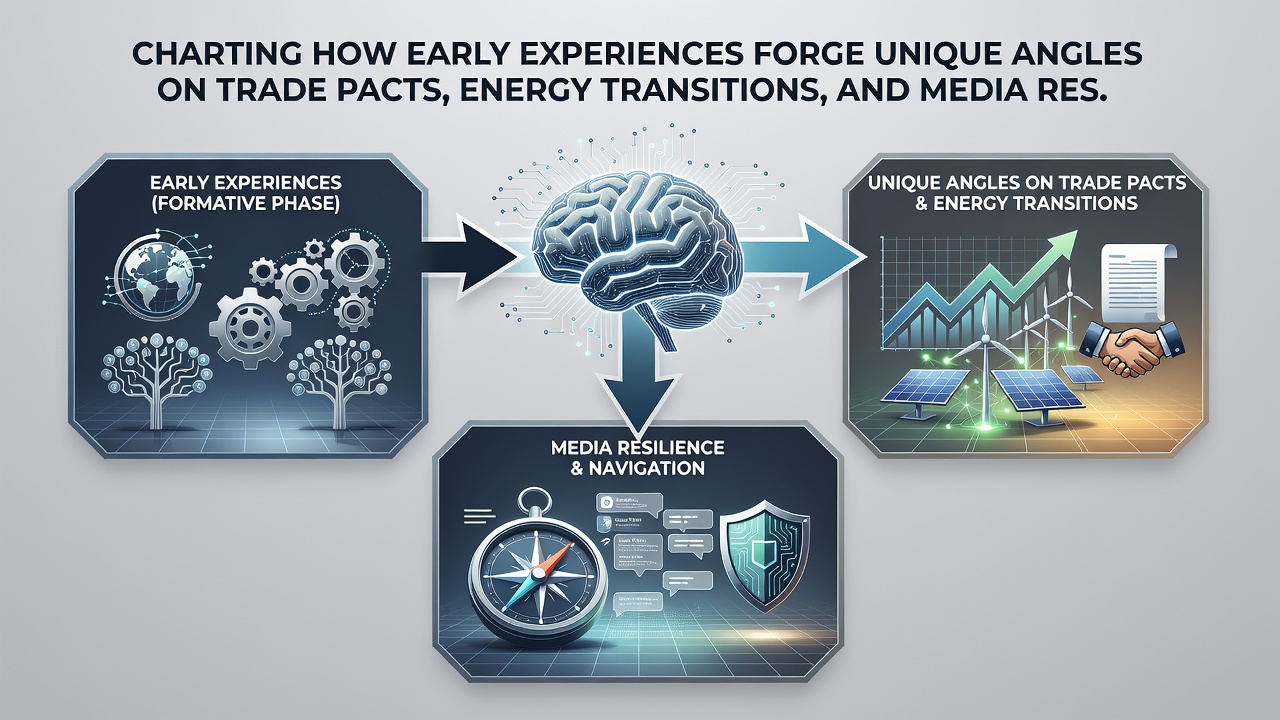
Analyses of career trajectories among negotiators and analysts demonstrate that combined early influences produce hybrid viewpoints, such as favoring trade pacts with embedded energy clauses that incorporate media literacy components for public engagement. Evidence suggests these unique angles emerge most clearly in collaborative settings where participants share biographical details to build consensus.
One case documented by observers involved professionals whose rural energy exposures informed demands for equitable technology transfers in international deals, while parallel media experiences prompted requirements for accessible documentation of negotiation processes. Data from academic repositories show such integrations yield more resilient outcomes when early-life variables receive explicit consideration during formulation stages.
Conclusion
Patterns identified across studies underscore the role of formative experiences in generating differentiated yet complementary approaches to trade pacts, energy transitions, and media responsibility. Continued examination of these connections supports development of frameworks that accommodate multiple entry points, drawing on evidence from varied global sources to inform evolving practices through 2026 and beyond.