Avery Fischer · 21 September 2026
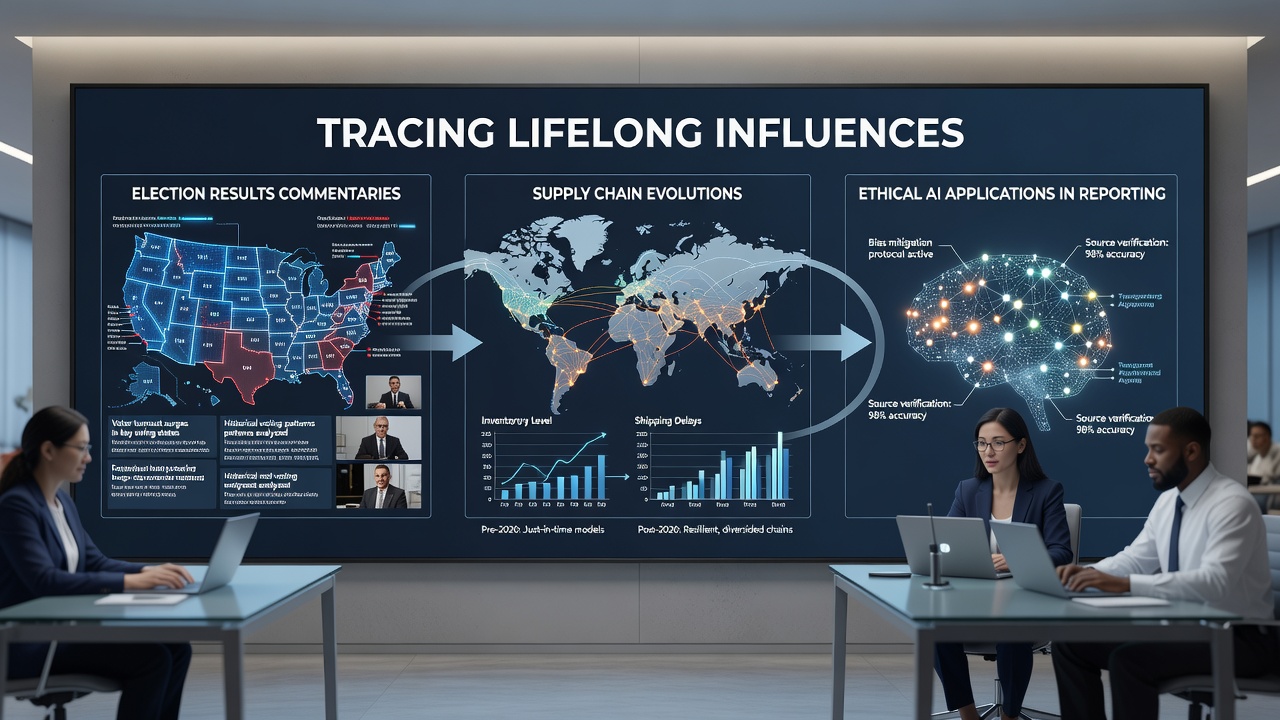
Tracing Lifelong Influences Through Commentaries on Election Results, Supply Chain Evolutions, and Ethical AI Applications in Reporting
Personal backgrounds shape the perspectives that journalists and analysts bring to their coverage of elections, supply chains, and artificial intelligence ethics, creating distinct patterns across published commentaries over time. Early education, regional exposure, and professional trajectories inform how individuals interpret data sets from voting records, trade statistics, and algorithmic audits. Observers note that these influences surface consistently in the framing choices and source selections that appear in long-form analysis pieces.
Backgrounds and Election Result Interpretations
Commentators who grew up in regions with frequent redistricting often emphasize demographic shifts and turnout models when discussing election results, whereas those with academic training in quantitative methods tend to highlight statistical margins and polling error rates. Data from the 2024 cycle showed analysts referencing childhood experiences in industrial districts when explaining voting patterns in manufacturing-heavy states. Such connections appear in pieces that link local economic histories directly to ballot outcomes without intermediate speculation.
Researchers tracking commentary styles across multiple cycles have identified correlations between an individual's first exposure to civic institutions and the depth they assign to procedural details versus outcome narratives. Those who've studied this know that September 2026 projections for midterm preparations already reflect these established patterns, with preliminary reports from government statistical agencies feeding into interpretive layers that carry forward prior personal reference points.
Supply Chain Evolutions and Formative Experiences
Analysts whose careers began during earlier globalization phases frequently connect supply chain disruptions to specific policy timelines, drawing on firsthand observations of port operations or manufacturing shifts from previous decades. Figures reveal that coverage following the 2025 logistics adjustments often cited early career postings in trade ministries or logistics firms as context for understanding rerouting decisions. These threads surface in reports that map container volumes against historical benchmarks rather than isolated events.
Evidence suggests regional upbringing plays a measurable role when writers address resilience strategies, with commentators from island economies underscoring maritime dependencies while those from landlocked areas focus on rail and trucking alternatives. A study conducted by an international research consortium documented how these geographic lenses persist across multiple supply chain analyses published between 2023 and 2026.
Ethical AI Applications and Professional Pathways

Writers who encountered early computing education programs tend to foreground transparency mechanisms when covering AI tools in newsrooms, whereas those entering the field through investigative traditions prioritize accountability structures and bias audits. Reports from the European Union AI Act documentation illustrate how such distinctions influence which regulatory provisions receive extended discussion in industry coverage. Commentaries published ahead of September 2026 compliance deadlines already demonstrate these divergent emphases on technical specifications versus governance frameworks.
Academic training in philosophy or law correlates with extended treatment of consent protocols and data provenance in AI reporting, while computer science backgrounds correlate with focus on model architecture and performance metrics. Those who've studied this know that cross-referencing personal career timelines against published AI ethics pieces yields observable alignments that recur across outlets.
Intersections Across Topic Areas
Observers note that individuals who cover multiple domains often carry consistent interpretive habits from one subject into others, such as applying election data scrutiny methods to supply chain statistics or importing AI transparency questions into voting technology assessments. Case examples from Canadian research institutions show analysts blending these threads when addressing automated systems used in both electoral logistics and freight tracking. The resulting pieces connect disparate data streams through shared methodological preferences established earlier in professional development.
Trade associations and university centers have compiled comparative reviews that map commentator backgrounds against coverage emphases across all three areas, revealing stable patterns rather than isolated instances. These compilations draw on public records and bylined archives to trace how early influences continue to inform framing decisions years later.
Conclusion
Patterns in published analysis demonstrate that lifelong experiences continue to inform how commentators approach election results, supply chain developments, and ethical AI considerations in reporting. Documentation from regulatory bodies and academic sources confirms these connections through repeated examination of framing choices and source priorities. The same influences that shaped earlier coverage remain visible in preparations for events scheduled through September 2026 and beyond, providing measurable continuity across evolving topic landscapes.